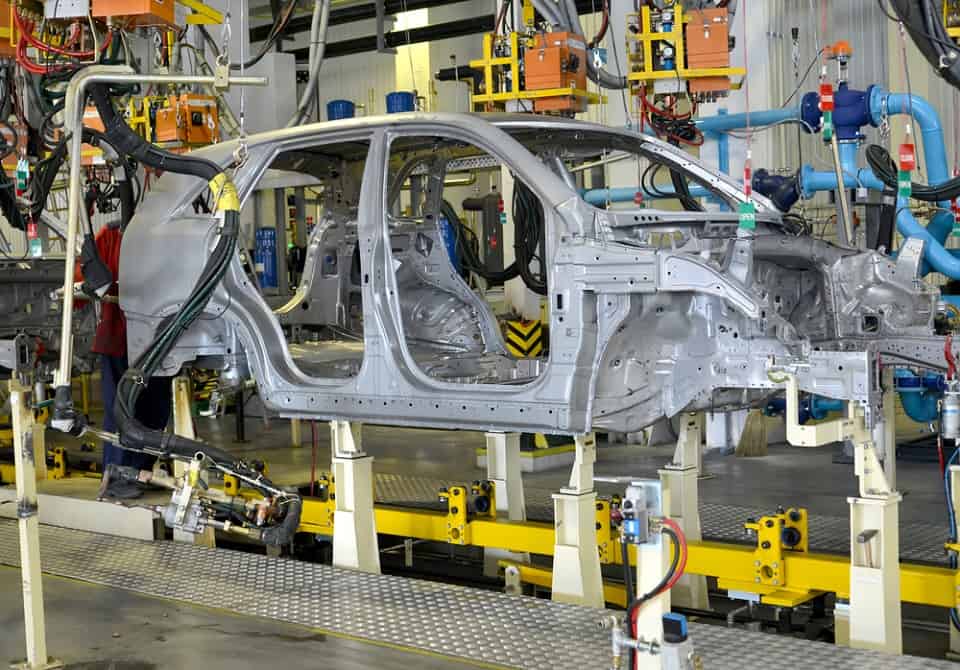
Secondly, another characteristic of plant assets is that they are Physical in Nature. When I talk about plant assets, I’m not discussing shares of stock or IOU notes. Plant assets are items you can physically touch and see, such as a company’s machinery or its real estate. These assets are essential for optimal operation in any business, whether they help produce goods or facilitate key one characteristic of plant assets is that they are: services. Vascular plant one-zinc-finger (VOZ) transcription factors play indispensable roles in orchestrating growth and stress responses in plants. These plant-specific regulators are integral to important biological processes such as flowering.

Equipment
- Plant assets are vital tools used to provide future economic benefits to the business.
- This includes purchase price, shipping costs, installation charges and any other costs directly attributable to bringing the asset to its working condition.
- Let’s take a logistics business as an example – their fleet of trucks (a plant asset) allows them to offer services and earn money.
- They don’t disappear after one use, and they don’t exist only in theory or paper.
- Let us look at the method of accounting and plant asset management.
- When I talk about plant assets, I’m not discussing shares of stock or IOU notes.
- Plant assets, on the other hand, are used in operations over multiple accounting periods.
In loose terms, the difference between the salvage value and the actual cost of the asset is known as depreciation. There are different ways through which a company can provide for reducing the cost of the asset. Let us look at the method of accounting and plant asset management. Plant assets fall under the fixed asset category and can be used in the business for more than one Bookkeeping for Chiropractors year. They are used for manufacturing and selling the goods and services of the company.
#1 – Straight Line Method
Despite being a vital regulator of numerous biological processes, significant information about their role is recording transactions not available. Herein, we identified and characterized six TaVOZ genes in T. Aestivum by genome-wide investigation, which are phylogenetically clustered into two groups.
One characteristic of plant assets is that they are:
They consist of conserved gene and protein architecture with two important domains (A and B). Tissue-specific differential expression of a few TaVOZ genes divulged their role during plant developmental processes. The interaction analyses identified other vital components in the intricate network of TaVOZ-mediated stress signaling. This study provides inclusive knowledge and significance of TaVOZ genes for future crop improvement programs. When it comes to the period of usage, it’s important to underscore how plant assets differ from current assets.
- Sorry, a shareable link is not currently available for this article.
- If debt has been used to purchase the plant asset, then the cash flow statement would also show the regular payments towards that debt too.
- They are usually land and building, plant and machinery that may be fixed or movable, or any other equipment that can be categorized as the same.
- As it involves heavy investment, proper controls should be put in place to secure the assets from damage, pilferage, theft, etc.
- Secondly, another characteristic of plant assets is that they are Physical in Nature.
- When it comes to the period of usage, it’s important to underscore how plant assets differ from current assets.
- For example, a business spends £5,000 on upgrading the manufacturing machine to improve its efficiency.
- From machinery to office equipment, these are the workhorses that keep a business running day in and day out.
- Things like cash, accounts receivable, and inventory are current assets.
- The cost incurred would include legal fees, commissions, borrowing costs up to the date when the asset is ready for use, etc., are some of the examples.
- They’re expected to be completely consumed or sold within a single accounting period.
Things like cash, accounts receivable, and inventory are current assets. They’re expected to be completely consumed or sold within a single accounting period. Plant assets, on the other hand, are used in operations over multiple accounting periods.